23 June, 2025

 Sologenx Foundation
 Water Conservation
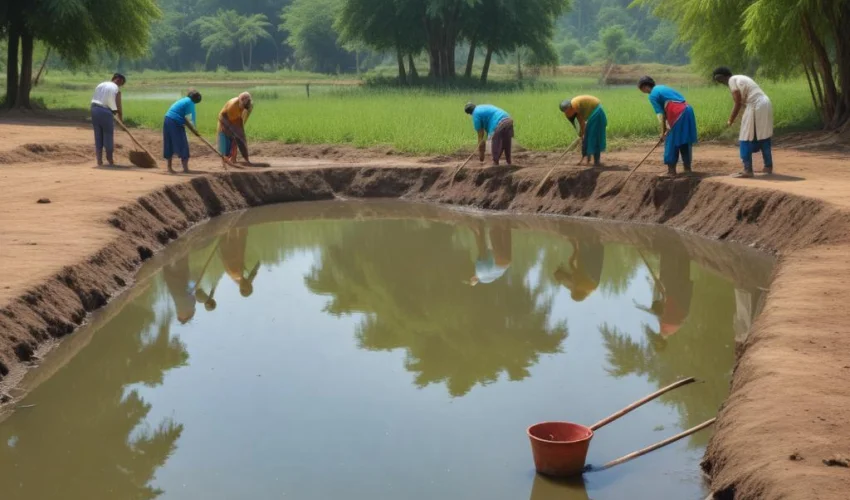
In hundreds of Indian villages there is a depression everyone calls a pond and nobody remembers holding water. Silted beds, garbage inlets, encroached banks-these dead water bodies look like loss. But across the country, villages are discovering that a dead pond is not dead at all; it is dormant. Desilt it before monsoon, clear its channels, protect its banks, and a single rainy season brings back water, birds, and wells that spring back to life within months.
Every Indian city and village runs on water it no longer sees. Tanks, ponds, stepwells, and streams that sustained communities for centuries have been filled, fenced, or forgotten-and we now pay tanker trucks for what monsoon clouds once delivered free. Yet the fix is astonishingly local. A revived pond recharges wells for kilometres, a working stepwell cools a whole mohalla, and one rooftop that harvests rain can cut a family's water bill by half.
Water body restoration is patient, physical work. Volunteers map the catchment, desilt the bed before monsoon, repair embankments, and remove encroachments through dialogue rather than conflict. Native grasses are planted on banks to filter runoff, and inlet channels are cleared so the first rains actually reach the water. Done well, a restored pond begins filling in a single monsoon, and wells that ran dry in March start holding water till May.

Sologenx Foundation's water body restoration project brings together gram panchayats, schools, and daily volunteers to revive ponds and lakes one basin at a time. The foundation contributes survey data, desilting labour, and plantation along the banks, while local residents take over watch committees so dumping and encroachment do not return. Every restored water body becomes a living classroom on how scarcity is often a management failure, not a natural one.
A restored pond is water security your grandchildren will literally drink. Aquifers recharged this decade will still be feeding wells when today's volunteers are old. The villages that revive their ponds now are the villages that will not watch their youth migrate for water in twenty years.
Before: Silted ponds, dry wells, summer water queues.
After: Filling water bodies, recharged borewells, returned birds-and a village that no longer fears April.
Water security begins at your rooftop and your nearest pond. These steps take little money and mostly ask for your time and attention.