2 August, 2025

 Sologenx Foundation
 Green Education
Indian schools produce brilliant engineers who have never planted a tree and top scorers who cannot name the river their city drinks from. The gap is not intelligence-it is curriculum. Environmental education that stays inside a textbook produces awareness without agency. A green curriculum fixes that by making the campus itself the lesson: gardens, waste audits, water meters, and eco-clubs where students run real environmental work.
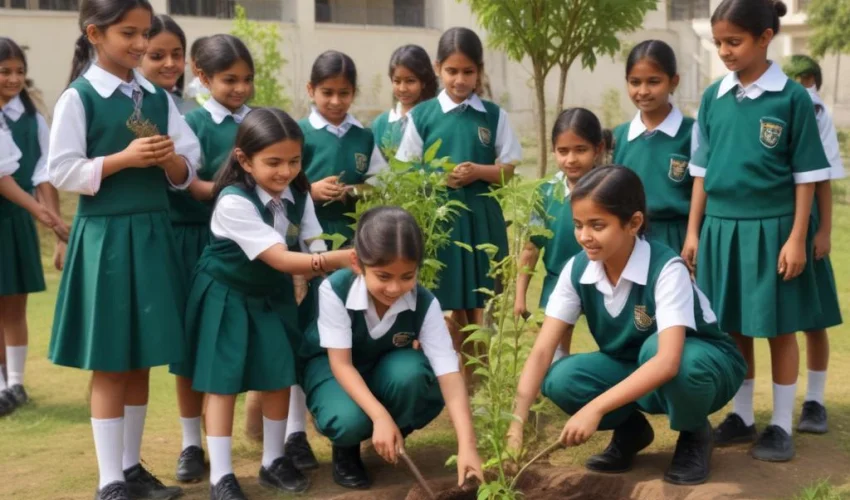
A child who learns fractions from a textbook forgets them by thirty; a child who plants a tree in Class 5 remembers it at fifty. Environmental education works because it is experienced, not memorized. When schools make nature a subject you can touch-composting the canteen waste, auditing the school's water use, adopting a sapling each-science stops being marks on a mark sheet and becomes a way of seeing the world.
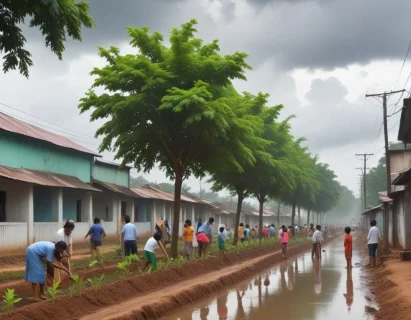
The strongest green programs live inside the timetable, not beside it. Eco-clubs meet weekly, waste audits become math lessons, the school garden teaches botany better than any diagram, and plantation days give every student a personal stake in the campus. Teachers report a side effect nobody predicted: children bring the habits home, and households start segregating waste because an eight-year-old insists on it.

Sologenx Foundation's environmental education in schools program equips teachers with activity kits, trains eco-club leaders, and organizes plantation and clean-up days that anchor classroom learning in real work. The foundation's approach is deliberately practical: less lecturing, more doing. A school that runs one full year of the program typically sees measurably less campus litter and a waiting list for the eco-club.
The climate challenges of 2050 will be solved-or suffered-by the children sitting in classrooms today. A school that teaches sustainability now is not adding a subject; it is building the workforce, voters, and parents the next half-century requires. The curriculum you support today is the competence your grandchildren will inherit.
Before: Environment as a chapter to memorize, littered playgrounds.
After: Thriving school gardens, student eco-clubs, and children who teach their parents to segregate waste.
Every school can become a green school without new buildings or budgets-only new habits. Here is where to begin.
2 August, 2025
6 August, 2025
10 August, 2025
14 August, 2025
18 August, 2025
22 August, 2025