25 October, 2025

 Sologenx Foundation
 Eco-Livelihoods
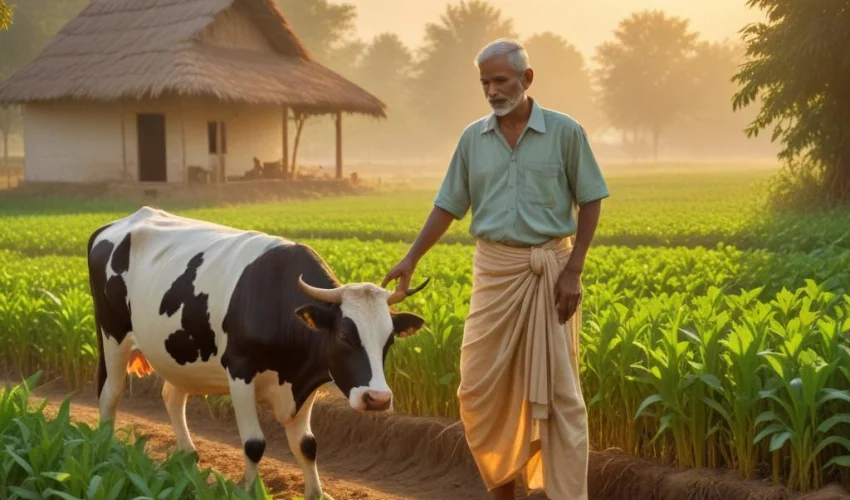
Ask a farmer why natural farming spreads and the answer is rarely ideological-it is arithmetic. Chemical inputs cost more every year; jeevamrut and mulch cost almost nothing. A farmer who stops buying fertilizer and pesticide keeps his margin even when prices crash, and his soil grows richer while his neighbour's thins. Natural farming is not a return to the past; it is the spreadsheet of the future, and India's farmers are running the numbers.
Natural farming shows the same pattern at field scale. Farmers who shift to jeevamrut, mulching, and mixed cropping cut input costs sharply because they stop buying chemical fertilizers and pesticides. Soil organic matter rises, water retention improves, and yields stabilize within a few seasons. The first farmers to switch take a risk; the hundred farmers who watch them succeed need no convincing-they copy what works.
Sologenx Foundation's eco-livelihoods program trains women's self-help groups and farmers in practical green skills-vermicompost production, nursery raising, upcycled product making, and natural farming techniques. The foundation helps groups find their first buyers and organizes market linkage so skills convert to income quickly. Every batch that graduates adds another family that profits directly from a healthier environment.

Conservation that ignores livelihoods fails; conservation that creates them succeeds. When a women's self-help group earns from making compost, leaf plates, or upcycled crafts, protecting the environment stops being charity and becomes business. Across rural India, thousands of green micro-enterprises now prove that ecology and economy are not rivals-they are partners that strengthen each other with every season.
Soil is the slowest asset on earth to build and the fastest to lose. Decades of chemical farming have mined it; natural farming deposits back. Every hectare restored now is a farm that still feeds a family in your grandchildren's time-and food grown in living soil nourishes the next generation, not just fills them.
Before: Costly chemicals, debt cycles, women without income.
After: Profitable green micro-enterprises, living soil, and villages where conservation pays the bills.
Green livelihoods grow when buyers, farmers, and families choose them deliberately. Here is how you can push the cycle forward.
25 October, 2025
15 May, 2025


17 May, 2025


