17 May, 2025

 Sologenx Foundation
 Upcycling & Green Art
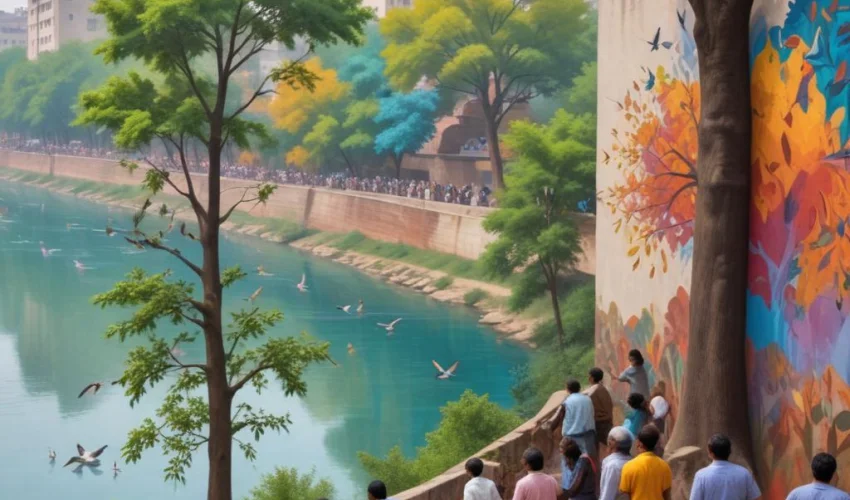
Facts inform people; art moves them. Climate apathy is rarely a deficit of information-everyone knows the planet is warming. It is a deficit of feeling. A scrap-metal sculpture of a river dolphin in a public square, a mural of a drying river painted on a school wall, rangolis of fallen leaves-these works do what no chart can: they make passersby stop, feel, and think. Green art is climate communication's most underrated weapon.
Green art has a peculiar power: it argues without arguing. A sculpture welded from scrap metal in a city park does more for climate awareness than a hundred pamphlets, because beauty bypasses defences. Mural walls painted from waste paint, rangolis made from fallen leaves, classrooms decorated from discarded packaging-each piece quietly teaches that what we throw away still has value, and so do the hands that remake it.
Recycling melts things down; upcycling lifts things up. An old tyre becomes a planter, a broken bucket becomes a birdhouse, and wedding banners become school bags. Upcycling does not just divert waste from landfills-it changes how people see waste entirely. Once you have made a lamp out of a bottle, you can never look at 'trash' the same way again. That shift in vision is the real product of every upcycling workshop.

Sologenx Foundation's Upcycle and Green Art Labs run hands-on workshops in schools, colleges, and community halls across the region. Participants learn to build useful products-planters, stationery holders, festival decor-from material that was headed for the bin. Women's groups use the same skills to create sellable products, turning waste into income. The labs prove week after week that creativity is the cheapest recycling technology ever invented.
Children who grow up in cities decorated with green art absorb environmental consciousness as naturally as language. Public art shapes what a culture values without anyone noticing the lesson. The walls you paint today are the beliefs your grandchildren will think they formed themselves-and they will be right.
Before: Scrap headed to landfills, creativity headed nowhere.
After: Useful products, green art on public walls, and a community that sees treasure where it once saw trash.
Upcycling needs no budget-just eyes that look twice before throwing. These steps will start your hands and your neighbourhood thinking differently.

17 May, 2025